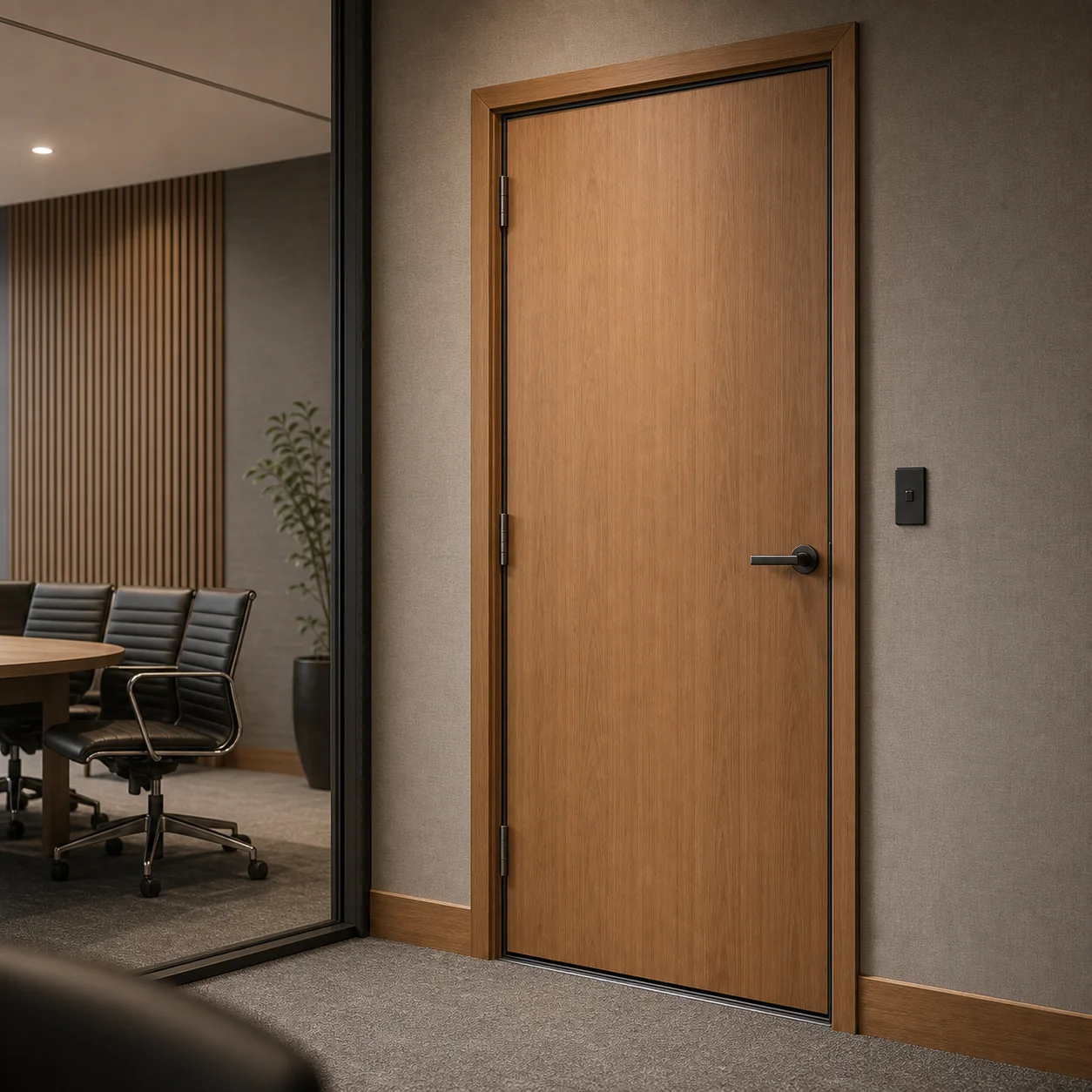
Sealed Meeting Room Door
Perimeter and threshold detailing for quieter workspaces.

Sound-rated door solutions for calmer, better-performing interiors
When privacy, concentration, and occupant comfort matter, acoustic doors play a big role in the performance of the full room envelope. Brightwater Joinery manufactures acoustic door solutions with solid-core options, sealing details, threshold coordination, and project-specific support for quieter interior spaces.
Sound-rated door sets can be finished to suit the interior while still allowing for solid cores, seals, thresholds, glazing and hardware.
Perimeter and threshold detailing for quieter workspaces.
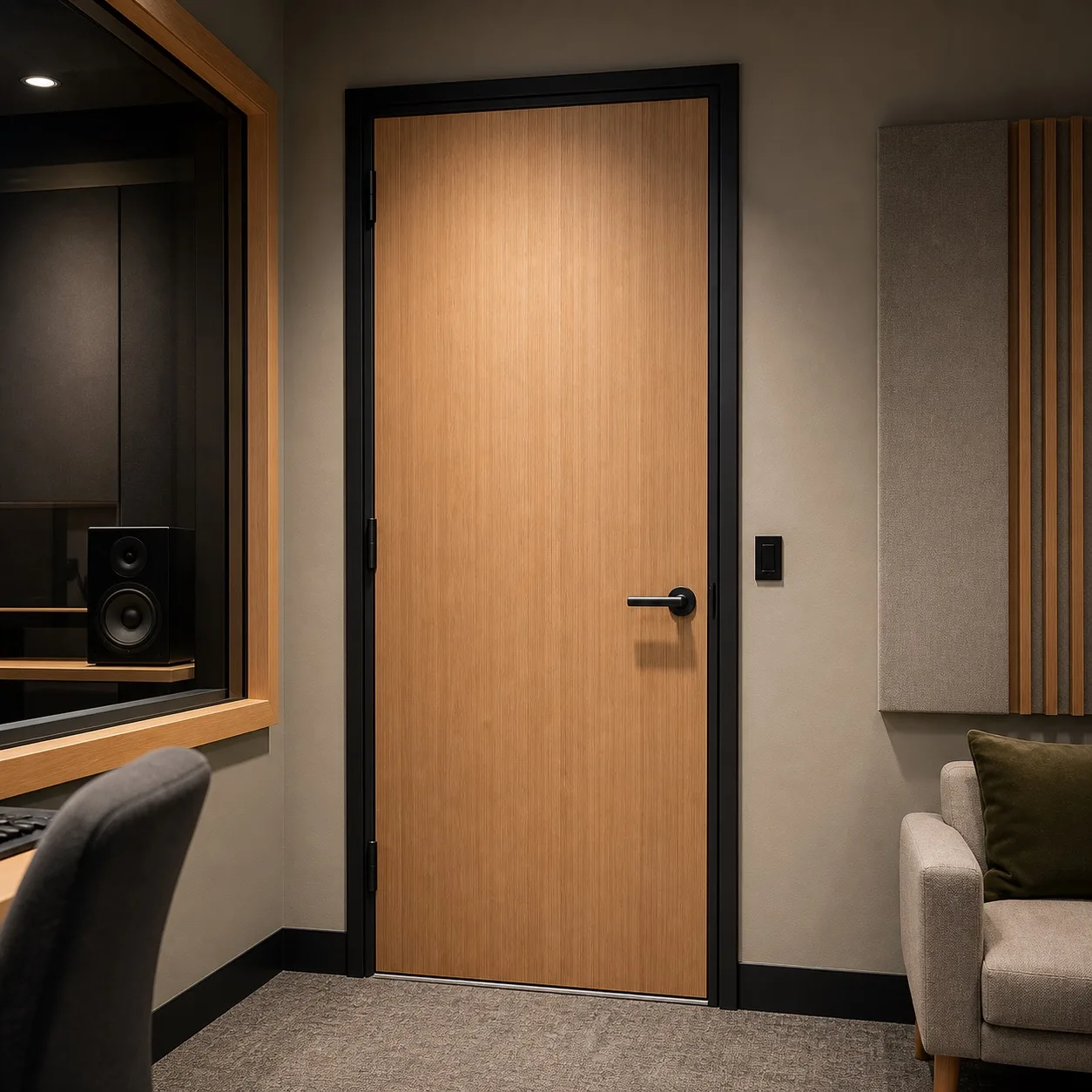
Acoustic performance can still suit premium interior finishes.
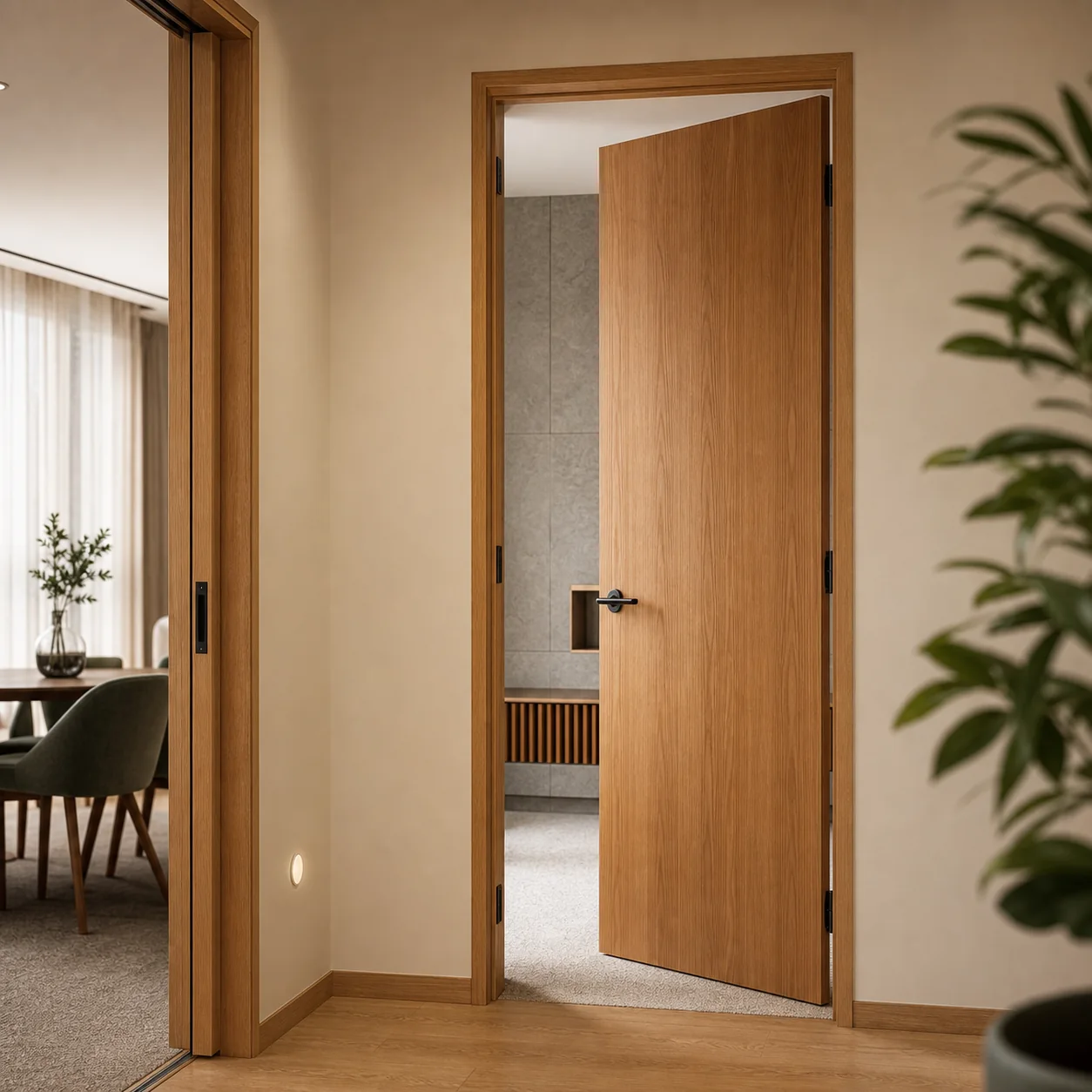
Useful where privacy and a refined finish both matter.
Acoustic doors are typically selected when background noise needs to be reduced between rooms or when speech privacy is important. The right solution depends on the full door set and how the surrounding wall, frame, and threshold are detailed.
Acoustic performance is not just about the door leaf. It comes from the entire assembly working together, especially where air gaps around the door would otherwise let sound pass straight through.
Solid-core constructions are often used where extra mass and improved sound separation are needed.
Perimeter seals, drop seals, and threshold details can be critical to reducing sound leakage around the frame.
Vision panels, closers, access hardware, and other components need to be selected with the acoustic brief in mind.
The most useful starting point is the room function and the level of privacy or noise control required. A meeting room, apartment entry, consulting room, and music space can all need different detailing.
A door leaf with good mass can still underperform if the frame, threshold, or hardware leaves gaps. The best result comes from treating the door as part of the room envelope.
Common questions from builders, architects, and clients planning quieter spaces.
They are commonly specified for offices, meeting rooms, apartments, education spaces, healthcare settings, and other interiors where better sound separation is required.
Performance depends on the complete door set, including the core type, frame, seals, glazing details, threshold treatment, and selected hardware.
Yes. Acoustic doors can often be finished to align with surrounding interior doors while still being detailed for sound control requirements.
Yes. Brightwater Joinery can work with builders, architects, and specifiers to shape an acoustic door set around the project brief and hardware requirements.