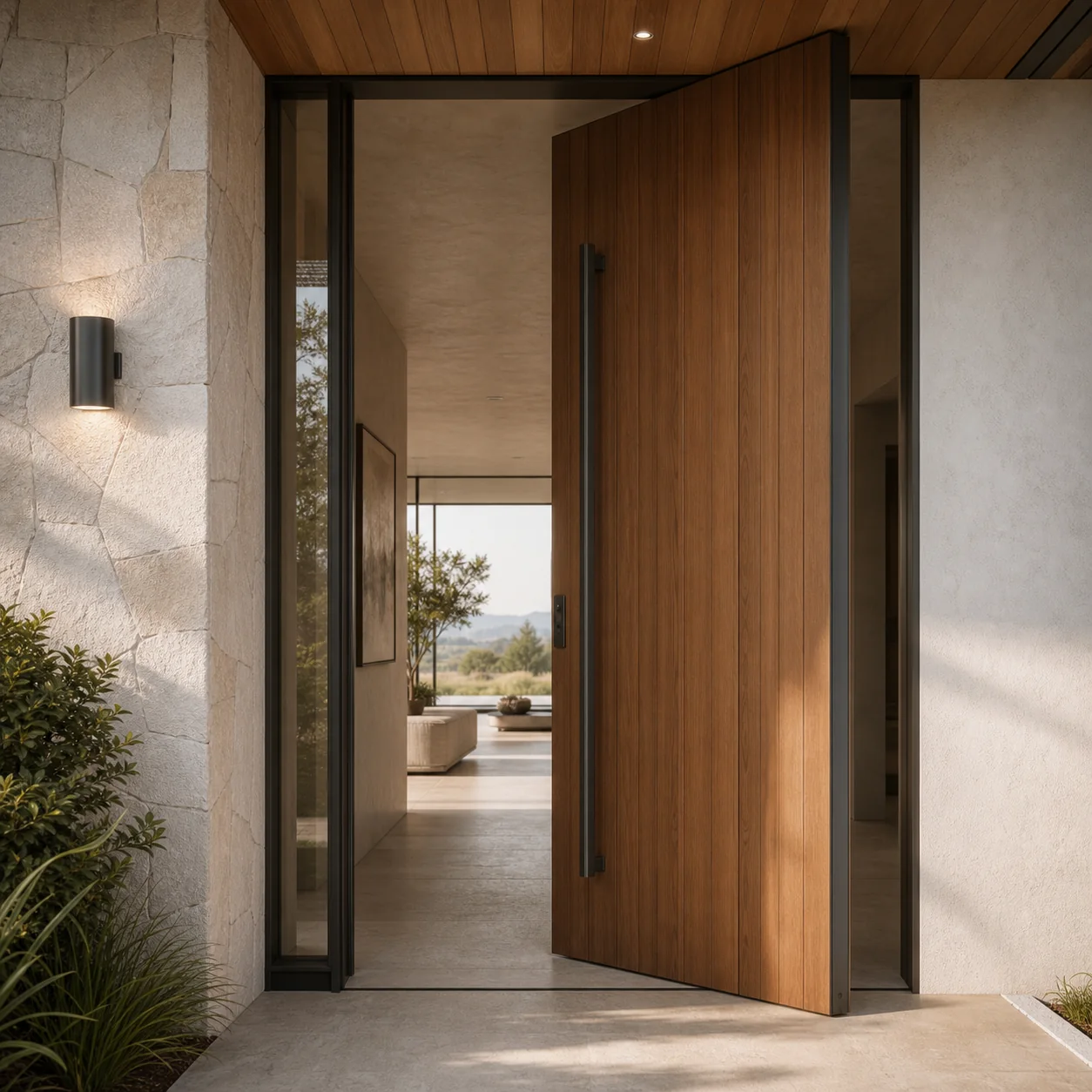
Oversized Pivot
Statement entry doors with scale and architectural presence.

Large-format custom doors for bold architectural openings
Oversized and specialty doors demand more than a bigger leaf. They require early coordination around hardware, swing type, clearances, weight, finish, handling, and installation. Brightwater Joinery manufactures custom door solutions for projects that call for scale, presence, and tailored detailing.
Large-format doors can be hinged, pivoting, sliding, full-height, exterior, or interior depending on the opening and design intent.
Statement entry doors with scale and architectural presence.
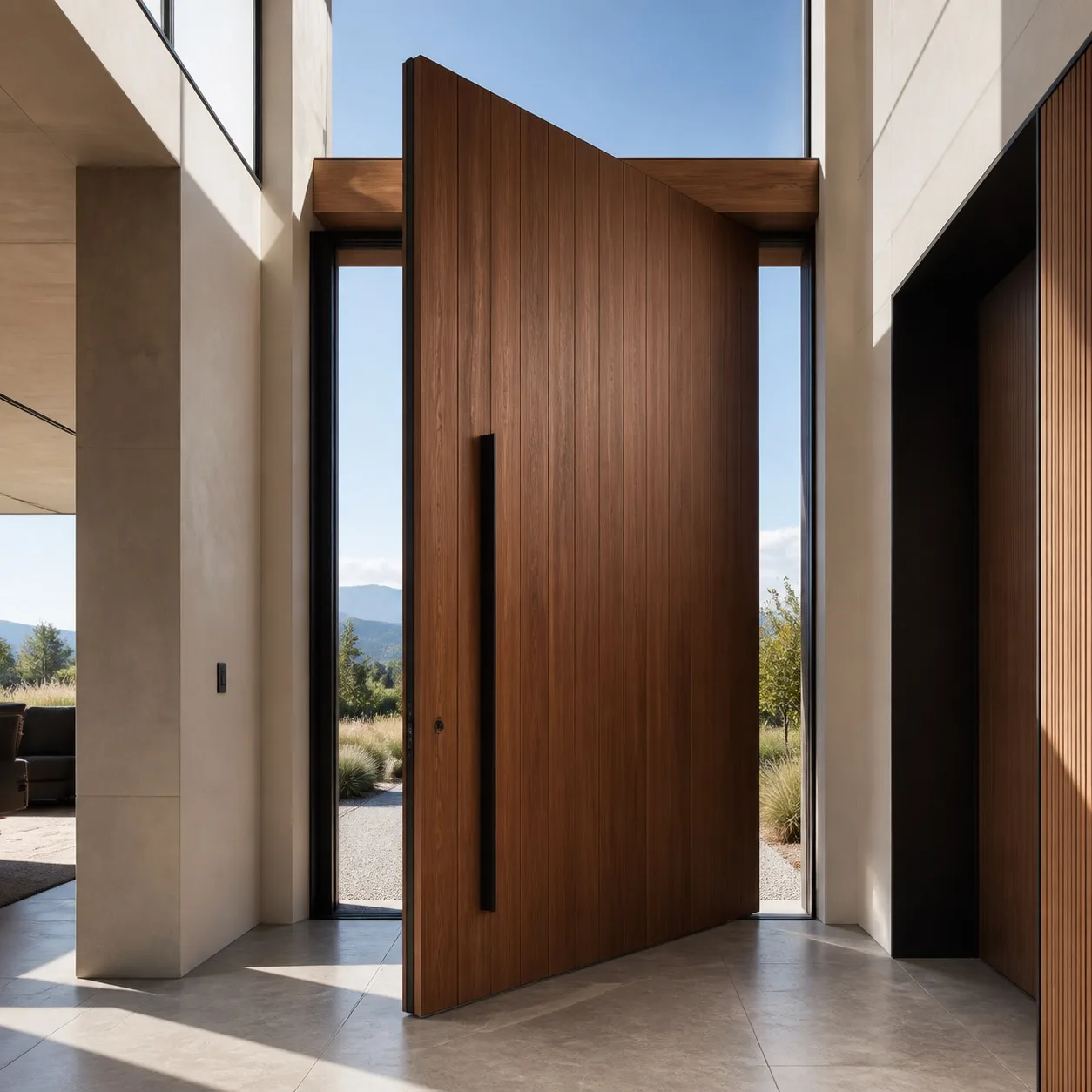
Custom leaf and frame detailing for bigger openings.
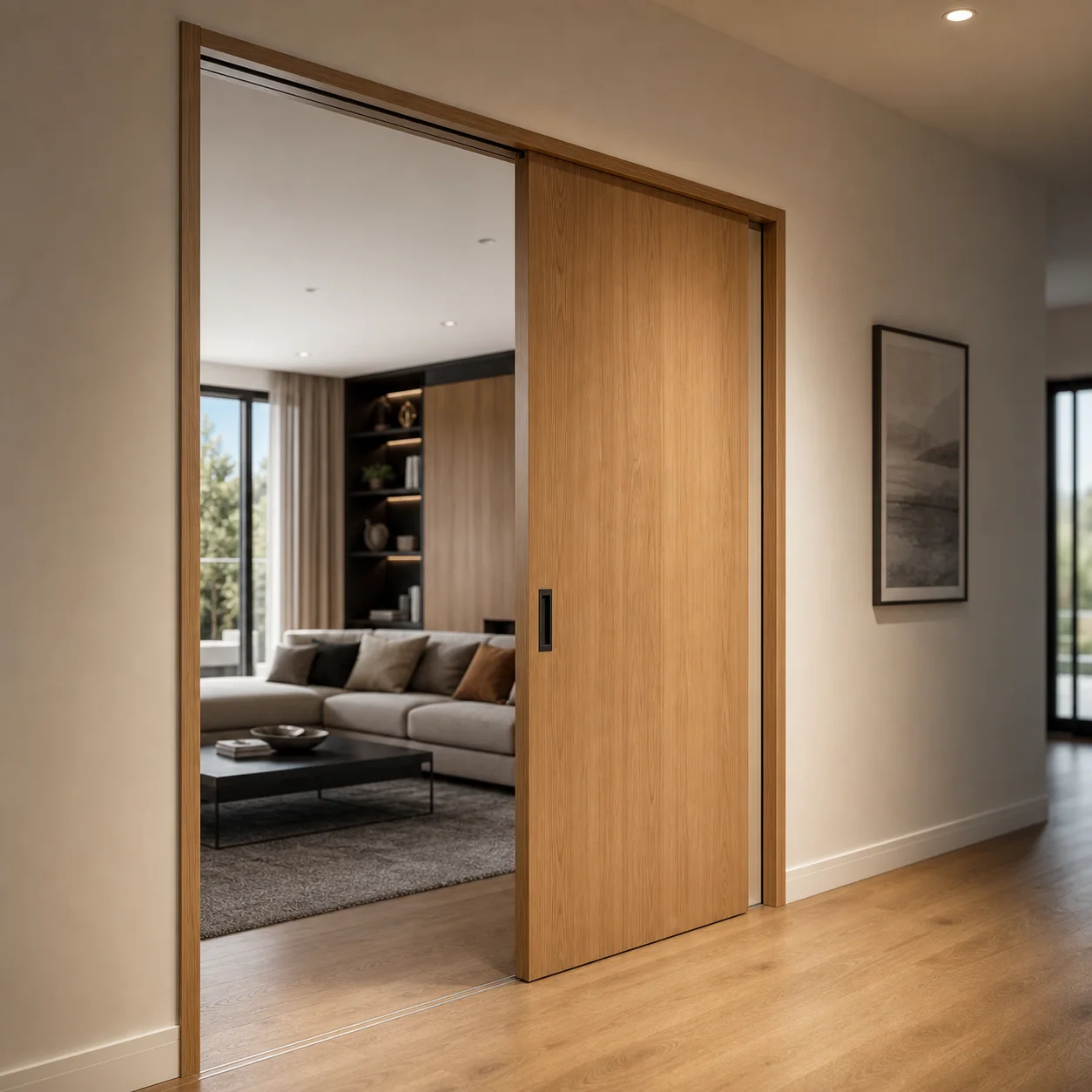
Sliding formats can suit broad interior openings.
These projects work best when door design is considered early alongside structure, cladding, access, and hardware.
Large-format doors introduce extra load, movement, and handling considerations. Good detailing starts with the opening, not the door leaf in isolation.
Overall height, width, swing path, floor levels, and adjacent finishes all influence the right door format and hardware approach.
Large-format leaves need the right hinges, pivots, frames, latches, closers, seals, and handling plan for fabrication and install.
Oversized doors often sit at the centre of the design language, so grain direction, veneer matching, finish, edge details, and protection matter.
Early conversations are much more useful when we can understand the desired door format and the constraints around the opening.
Once a door becomes large or heavy, hardware, frame rigidity, clearances, and site handling become central to the design. Discussing those items early makes the result cleaner.
Helpful early-stage questions for architectural door briefs.
Yes. Oversized doors are assessed against the project brief so the door format, construction, and hardware can be coordinated appropriately.
Yes. Pivot configurations are a common solution for architectural large-format doors, depending on the project requirements.
Door size, configuration, finish intent, opening details, and preferred hardware approach all help shape an accurate early discussion.
Absolutely. Earlier coordination usually leads to cleaner detailing, better hardware integration, and a smoother install path.